SpecOS
A development tool achieving synchronized repository states and low-latency architectural scaffolding.
Summary
The Challenge
Software development often faces a disconnect between architectural design and implementation. Maintaining a consistent 'source of truth' becomes difficult as the codebase evolves, leading to architectural drift.
The Strategic Solution
Developed a 'Living Spec' workspace where architecture remains the primary interface. SpecOS utilizes AI to generate boilerplate and database schemas directly into GitHub, maintaining a synchronized blueprint within the repository.
Technical Implementation
GitHub Integration and Synchronization
Maintaining consistency between an architectural specification and a live repository requires an efficient synchronization strategy. Updating files individually via API can lead to fragmented commit histories and inconsistent states.
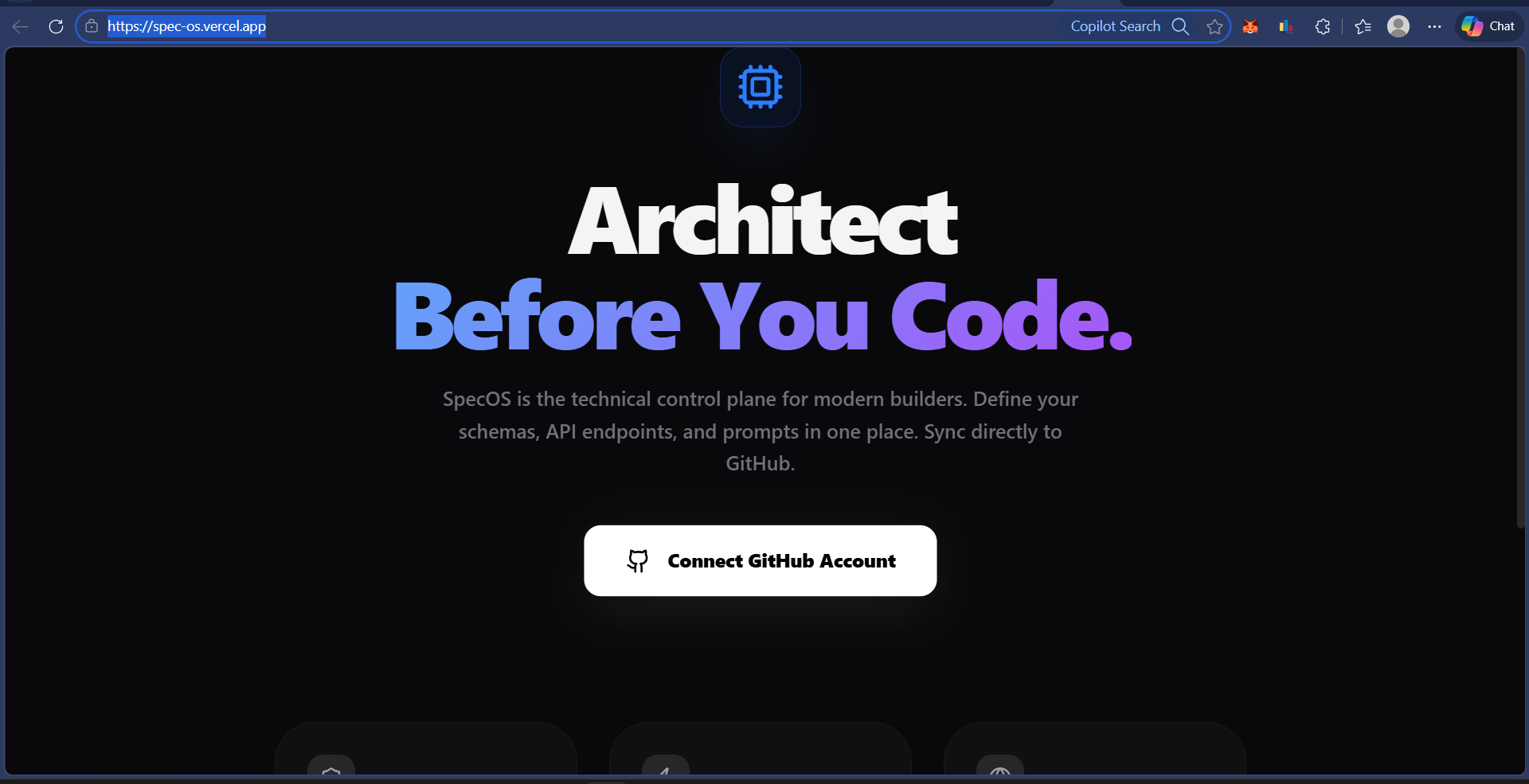
Atomic Repository Updates Utilized the GitHub Git Tree API to batch multiple file changes into single, atomic commits. This ensures that architectural updates and code generations are applied simultaneously, preserving repository integrity and commit clarity.
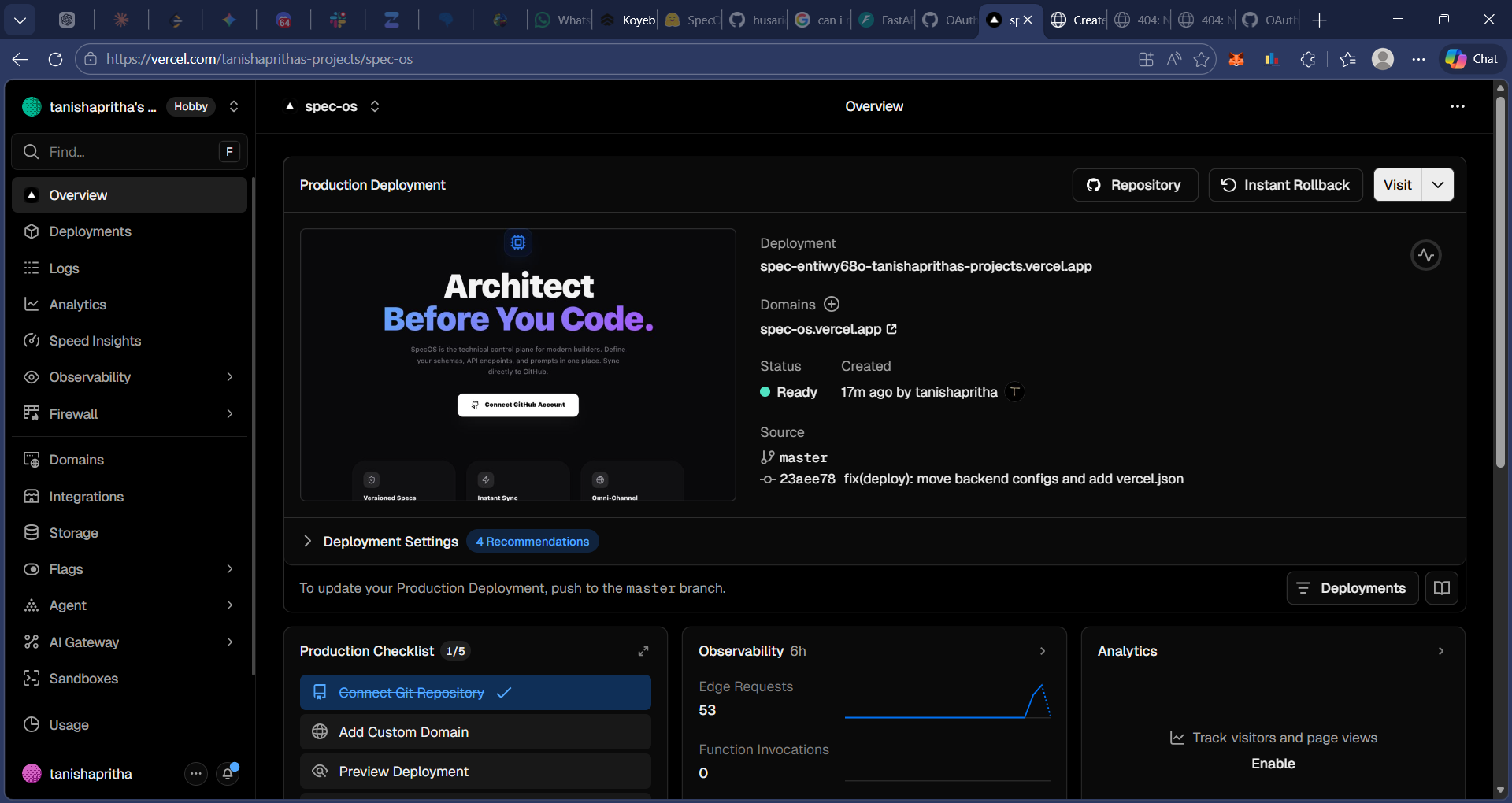
def sync_to_github(repo, files_to_update, spec_json):
    # Construct tree entries including the living spec
    tree_items = [InputGitTreeElement(p, '100644', 'blob', content=c)
                  for p, c in files_to_update.items()]
    tree_items.append(InputGitTreeElement('spec.json', '100644', 'blob',
                                         content=json.dumps(spec_json)))

    # Atomic commit via Git Tree API
    base_tree = repo.get_git_tree(repo.get_commits()[0].sha)
    new_tree = repo.create_git_tree(tree_items, base_tree)
    repo.create_git_commit("Update architecture spec and scaffold", new_tree, ...)
Non-Intrusive Repository Analysis
For importing existing projects, the system must analyze structure without code execution to ensure security.
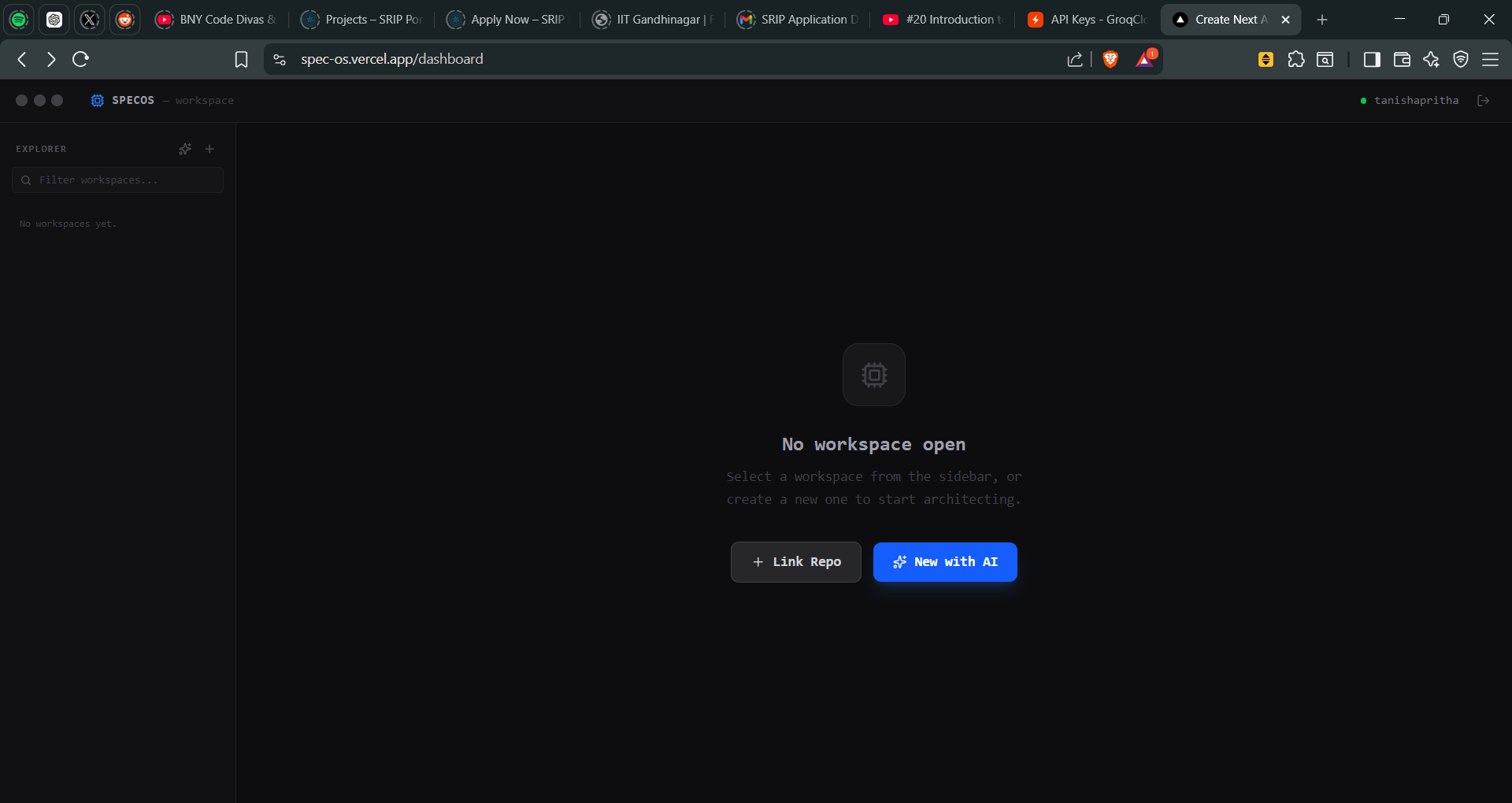
Implementation: Developed a specialized parser using framework-aware pattern matching. This analyzes class signatures and API decorators to reconstruct a comprehensive architectural spec from the existing codebase.
Latency Optimization
To ensure a responsive user experience, generation times must be minimal.
Optimization: Integrated the Groq Llama 3.3 inference engine. By using high-performance inference and optimized prompt structures, generation latency was reduced from 15 seconds to under 800 milliseconds, facilitating a more efficient development workflow.